 English

Ball screw accuracy grades such as C5, C7 and C10 are frequently used when selecting a ball screwlinear module, but the grade number is often misunderstood as the complete positioning accuracy of the finished axis.
It is not.
Aball screw linear module precision gradeprimarily describes the lead accuracy characteristics of the ball screw itself under a defined standard and test method. The final positioning accuracy of the assembled module also depends on screw support, preload, bearings, linear guides, coupling, motor feedback, temperature, mounting and calibration.
This guide explains how C5, C7, C10 and higher-precision grades should be interpreted, how the grading logic relates to ISO/JIS ball screw standards, and how to choose a practical precision level for a real automation application.
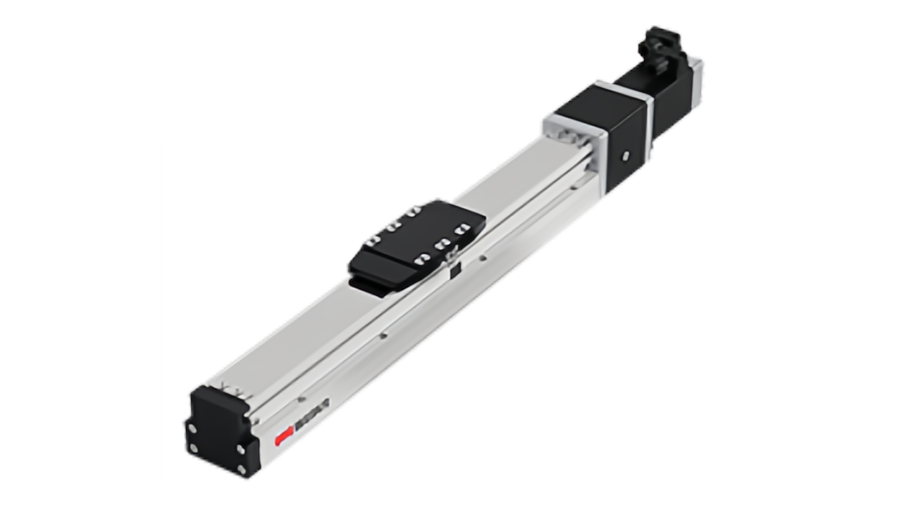
What Does a Ball Screw Precision Grade Mean?
A ball screw converts screw rotation into linear travel. Ideally, one revolution should produce exactly the nominal lead. In reality, manufacturing deviations cause the actual travel to differ slightly from the theoretical travel.
The precision grade controls how tightly this travel error is limited.
In practical terms, the grade can describe characteristics such as:
- Lead accuracy
- Travel deviation
- Variation over a specified travel length
- Linearity of actual travel
- Direction of accumulated lead error
Important:the ball screw accuracy grade is a component specification. It is not automatically the same as the completed linear module's positioning accuracy.
ISO 3408 and JIS Ball Screw Accuracy Standards
Ball screw specifications are commonly referenced to ISO 3408 and related national standards such as JIS B 1192.
The standards define terminology, acceptance methods and accuracy-related characteristics for ball screws.
In manufacturer documentation, precision ball screw grades are often identified with C-class designations such as C0, C1, C3 and C5, while transport-oriented or lower-accuracy classes may include C7 and C10.
Why standard name alone is not enough
When comparing suppliers, confirm:
- Which standard is being referenced
- Which grade system is used
- Whether the screw is intended for positioning or transport
- Which travel length the accuracy value applies to
- Which specific error parameter is being quoted
Different catalogs may present the same underlying accuracy concept in different table formats.
C5, C7 and C10: What Is the General Hierarchy?
As a general grade hierarchy, a lower C number represents tighter lead accuracy.
| Typical Grade | General Precision Level | Typical Direction of Use |
|---|---|---|
| C3 and above | Very high precision | Precision positioning, machine tools, measurement-related motion |
| C5 | High precision | Precision automation and positioning |
| C7 | Moderate precision | General positioning and transport applications |
| C10 | Lower precision | Transport or motion where tight absolute positioning is not required |
This table is a selection direction, not a universal application rule. The actual manufacturer specification should always be checked.
C0 to C5 and C7 to C10 Are Not Always Evaluated the Same Way
One important detail is that high-precision positioning grades and transport-oriented grades can be defined using different lead-error characteristics.
In commonly used JIS/ISO-based manufacturer specifications:
- C0 to C5 are controlled using positioning-oriented lead accuracy characteristics such as linearity and directional travel behavior.
- C7 to C10 are commonly specified using travel error over a defined reference distance such as 300 mm.
This is why directly comparing only one “± value” across C5, C7 and C10 can be misleading.The grade definitions and evaluated characteristics are not necessarily identical.
Why This Matters When Reading a Supplier Catalog
Suppose one supplier quotes a C5 positioning screw and another quotes a C7 transport screw.
If you compare only one tolerance number without checking the test definition, you may misunderstand the real difference.
Always ask:
- Is the value cumulative lead error?
- Is it measured over 300 mm?
- Is it measured over the full effective stroke?
- Does it describe travel variation or mean travel error?
- Is the screw preloaded?
C5 Ball Screw Modules
C5 is widely used for precision-positioning ball screws in industrial automation.
A C5ball screw modulecan be a strong choice when the machine needs:
- Good absolute positioning
- Good repeatability
- Controlled lead error
- Precision dispensing
- Inspection positioning
- Electronics assembly
- Accurate multi-point positioning
C5 does not guarantee the finished module accuracy by itself
A C5 screw installed on a poorly machined base with loose bearings and high thermal variation will not deliver C5-like machine-level positioning automatically.
The entire module must support the screw's precision.
C7 Ball Screw Modules
C7 is commonly used where cost, general positioning and motion repeatability are more important than very tight absolute coordinate accuracy.
Typical applications can include:
- General automation
- Material handling
- Machine loading
- Fixture positioning
- Packaging equipment
- Teach-and-repeat systems
If the working coordinates can be taught or calibrated after assembly, a C7 solution may be sufficient for many industrial machines.
C10 Ball Screw Modules
C10 represents a looser lead-accuracy class and is generally used where the axis mainly transports or moves a load rather than performing precision coordinate positioning.
Possible applications include:
- Basic transfer
- Position adjustment
- Simple loading and unloading
- Low-cost movement where absolute error is not critical
However, the suitability of C10 depends on the required stroke and process tolerance. A machine should not choose C10 only because it is cheaper.
What About C3, C1 and C0?
Higher-precision classes such as C3, C1 and C0 are used when lead accuracy must be controlled more tightly.
They may be considered for:
- Machine-tool feed axes
- Precision inspection
- Measurement equipment
- High-end semiconductor or optical positioning
- Calibration-sensitive motion
As precision increases, screw manufacturing, preload, support bearings, mounting surfaces, temperature control and calibration become increasingly important.
Do Not Choose a Higher Grade Than the Machine Can Use
A C3 screw mounted on a flexible structure does not automatically create a C3-quality axis.
Higher screw precision can be wasted if the dominant error comes from:
- Guide straightness
- Base flatness
- Coupling misalignment
- Bearing clearance
- Thermal expansion
- Tooling deflection
- Motor-side feedback only
Precision should be balanced across the complete error budget.Buying the highest screw grade is not always the most economical way to improve machine accuracy.
Positioning Accuracy vs Repeatability
These terms should be separated.
Positioning accuracy
Positioning accuracy describes how closely the actual position matches the commanded coordinate.
Repeatability
Repeatability describes how closely the axis returns to the same position over repeated moves.
A module can have:
- Good repeatability but larger absolute lead error
- Good lead accuracy but poor repeatability because of backlash or mechanical looseness
The ball screw grade mainly addresses lead/travel accuracy, while repeatability depends strongly on backlash, preload and complete mechanical stability.
Backlash Is Not the Same as Precision Grade
Backlash is lost motion when the drive reverses direction.
Ball screw accuracy grade and backlash are separate specifications.
A screw can have:
- High lead accuracy but measurable axial clearance
- Lower lead accuracy but very low backlash through preload
For bidirectional positioning, both lead accuracy and reversal behavior matter.
Preload and Precision Grade Work Together
Preload reduces axial clearance and increases axial stiffness.
It can improve:
- Bidirectional repeatability
- Axial rigidity
- Response during direction reversal
But preload also increases:
- No-load torque
- Heat generation
- Lubrication demand
- Motor RMS torque
For a precision module, the screw grade and preload level should be selected together rather than independently.
The Support Bearings Can Limit the Benefit of a Precision Screw
The ball screw is supported by bearings that control axial and radial motion of the screw shaft.
If support-bearing preload or installation is poor, the screw can move axially even when the lead itself is highly accurate.
Precision module design should therefore control:
- Bearing preload
- Shaft-end machining
- Bearing-seat accuracy
- Coupling alignment
- Axial assembly stiffness
Guide Accuracy Is a Separate Error Source
The ball screw controls movement along the drive axis, while the linear guide controls the carriage path.
Guide errors can affect:
- Horizontal straightness
- Vertical straightness
- Pitch
- Yaw
- Roll
A high-grade ball screw cannot correct a poor guide path.
Motor Encoder Resolution Does Not Equal Ball Screw Accuracy
A high-resolution encoder allows the controller to command very small increments, but this does not guarantee the carriage will reach those increments with the same absolute accuracy.
The actual position still depends on:
- Ball screw lead error
- Backlash
- Elastic deformation
- Thermal growth
- Mechanical stiffness
Resolution, repeatability and positioning accuracy are different performance metrics.
Motor-Side Feedback vs Direct Linear Feedback
Most servo-driven ball screw modules use a motor encoder.
This measures motor shaft position and infers carriage travel through the screw lead.
If very high axis-level accuracy is required, a linear encoder can measure carriage position more directly.
| Feedback Type | What It Measures | Main Limitation |
|---|---|---|
| Motor encoder | Motor shaft position | Does not directly measure downstream screw and structural error |
| Linear encoder | Carriage position | Higher system complexity and cost |
Thermal Expansion Can Exceed the Difference Between Grades
Temperature changes can create meaningful position drift, especially on long ball screws.
Heat can come from:
- Ball circulation
- Nut preload
- Support bearings
- Motor heat
- Ambient temperature changes
For a precision axis, thermal behavior may become as important as the original screw grade.
Warm-up matters
A machine calibrated when cold may not hold the same absolute position after the screw reaches operating temperature.
Precision equipment may therefore use warm-up routines, temperature stabilization or compensation.
Stroke Length Changes the Meaning of Accuracy
An axis with 100 mm stroke and an axis with 1500 mm stroke should not be compared from one isolated tolerance number.
Longer travel makes cumulative lead error and thermal effects more important.
When reviewing specifications, ask:
- Is the value per 300 mm?
- Is it over the full stroke?
- Is it a travel deviation or a variation value?
- Is compensation included?
Can Calibration Improve a Lower-Grade Screw Axis?
Yes, if the error is stable and repeatable.
Calibration can measure position error along the stroke and create a compensation table in the controller.
This can improve errors caused by:
- Stable lead deviation
- Repeatable position-dependent error
- Systematic scale error
Calibration cannot reliably correct:
- Random backlash
- Loose bearings
- Unstable temperature
- Changing structural deflection
- Poor mechanical repeatability
Compensation is most effective after mechanical stability has already been achieved.
Does a C7 Screw With Compensation Become C5?
Not in the component-grade sense.
Software compensation can improve the assembled axis's positioning result, but it does not change the manufacturing grade of the ball screw.
The correct language is:
- The screw remains C7.
- The calibrated axis may achieve improved system-level positioning accuracy.
This distinction is important when documenting machine specifications.
How to Match Precision Grade to the Application
| Application Type | Typical Starting Direction | Main Reason |
|---|---|---|
| Basic transfer | C10 or C7 depending on tolerance | Absolute coordinate precision is less critical |
| General automation positioning | C7 | Balance of positioning capability and cost |
| Precision dispensing / assembly | C5 | Tighter lead control |
| Inspection positioning | C5 or higher | Absolute coordinates may matter |
| Machine tool / high-end measurement | C3 or higher depending on system | Tighter error budget |
This table is a starting point only. Final grade selection should be based on the machine's actual tolerance stack and measurement method.
When C5 Is Worth the Extra Cost
C5 becomes more valuable when:
- The process depends on absolute coordinates
- The axis moves to many positions over a long stroke
- Recalibration at every position is impractical
- Inspection data is tied to machine coordinates
- Process tolerance is tight enough that screw lead error is significant
When C7 May Be the Better Engineering Choice
C7 can be more economical when:
- Positions are taught after machine assembly
- Repeatability matters more than full-stroke absolute accuracy
- The process tolerance is moderate
- Calibration can remove stable systematic error
- Other machine errors dominate the accuracy budget
When C10 May Be Sufficient
C10 can be considered when the axis mainly transports, adjusts or moves to broad position zones and exact absolute coordinates are not important.
Before choosing it, confirm that accumulated travel error over the real stroke does not interfere with:
- Sensor locations
- Mechanical stops
- Fixture alignment
- Process windows
Precision Grade and Manufacturing Method
Precision positioning ball screws and transport-oriented ball screws can use different manufacturing and finishing routes depending on manufacturer.
Instead of assuming a specific manufacturing process from the grade alone, ask the supplier for:
- Ball screw grade
- Applicable standard
- Lead accuracy certificate if required
- Preload specification
- Axial clearance specification
Do Not Compare Only the Ball Screw When Buying a Linear Module
A useful module-level comparison should include:
- Ball screw grade
- Repeatability
- Positioning accuracy
- Backlash
- Guide straightness
- Support-bearing design
- Feedback system
- Thermal conditions
- Measurement length and method
A supplier offering a C5 screw but no module-level positioning data may provide less useful information than a supplier offering a complete tested axis specification.
Questions to Ask Before Selecting C5, C7 or C10
- What absolute positioning accuracy does the process require?
- What repeatability is required?
- What is the effective stroke?
- Are positions taught or calculated from coordinates?
- Is motion unidirectional or bidirectional?
- What thermal variation is expected?
- Is linear compensation available?
- Is direct linear feedback required?
- What other machine errors are in the tolerance stack?
- Is an accuracy certificate required?
Common Precision-Grade Selection Mistakes
Assuming C5 means the entire module is C5 accurate
C5 describes the screw grade, not the complete stage error.
Assuming lower encoder resolution means lower accuracy
Encoder resolution and mechanical positioning accuracy are different.
Choosing C3 when the machine frame is the dominant error source
The extra screw precision may not improve the tool-point result.
Choosing C10 only to reduce price
If the application needs absolute coordinate positioning, the cost saving can create commissioning and calibration problems later.
Ignoring thermal behavior
A high-grade screw can still drift as temperature changes.
Comparing tolerance numbers without the measurement definition
Always compare the same error parameter and travel length.
A Practical Precision-Grade Selection Workflow
- Define process tolerance at the tool or workpiece.
- Allocate an allowable error budget to the linear axis.
- Separate repeatability from absolute positioning accuracy.
- Define effective stroke and reference length.
- Choose a preliminary screw accuracy grade.
- Check preload and axial clearance.
- Check support bearings and guide accuracy.
- Evaluate thermal expansion.
- Choose motor-side or direct linear feedback.
- Decide whether calibration and compensation are required.
- Validate the assembled module over the real stroke.
What QRXQ Needs to Recommend a Ball Screw Precision Grade
- Required stroke
- Positioning accuracy requirement
- Repeatability requirement
- Bidirectional or unidirectional positioning
- Moving load
- Maximum speed and acceleration
- Working temperature range
- Motor and feedback system
- Calibration capability
- Machine structure and tooling arrangement
The correct grade is the one that fits the complete machine error budget.C5, C7 and C10 are useful component-level classifications, but real positioning performance comes from the screw, bearings, guides, feedback, temperature and structure working together.
QRXQ evaluates ball screw linear module precision from both the selected screw grade and the assembled axis requirements, avoiding unnecessary cost from over-specification while preserving the positioning performance the process actually needs.