 English

Linear Motion Knowledge Center
Total 103 Articles
Ball Screw Nut Types: Flange, Internal and External Circulation
Ball screw nuts are often described with terms such as flange nut, internal circulation, external circulation and preloaded nut. These terms sound like competing “nut types,” but they actually describe different design dimensions.A flange nut describes how the...
Ball Screw Linear Module Precision Grades: C5, C7 and Beyond
Ball screw accuracy grades such as C5, C7 and C10 are frequently used when selecting a ball screw linear module, but the grade number is often misunderstood as the complete positioning accuracy of the finished axis.It is not.A ball screw linear module precisio...
Ball Screw Linear Module Thrust Calculation
A ball screw linear module converts motor torque into linear thrust through the helical motion of the screw and nut. Compared with a timing belt drive, the relationship between torque, screw lead and thrust is much more direct, which makes ball screw modules e...
Speed and Acceleration Limits of Timing Belt Linear Modules
Timing belt linear modules are known for high-speed, long-stroke motion, but the maximum speed shown in a catalog is only one part of the real performance limit. In an operating machine, acceleration, belt tension, free belt length, pulley speed, carriage mass...
Timing Belt Linear Module vs Electric Cylinder: Which Should You Choose?
A timing belt linear module and a servo electric cylinder can both create programmable linear motion, but they are designed around different mechanical priorities. A belt-driven stage is usually optimized for long travel, high speed and repeated positioning, w...
Timing Belt Linear Modules in Printing and Textile Machinery
Printing and textile machines often combine long travel, repeated reversing motion and continuous material flow. A printhead may scan back and forth across a substrate, a coating head may traverse over a web, or a textile handling mechanism may need to move in...
Timing Belt Linear Modules in Semiconductor and Electronics
Timing belt linear modules are widely used in semiconductor and electronics automation because they combine long travel, high speed, relatively low moving mass and simple mechanical construction. These strengths make them especially suitable for transfer, load...
Timing Belt Linear Module Thrust Calculation
Timing belt linear module thrust is not determined by motor torque alone. The motor, pulley radius, belt efficiency, moving mass, acceleration, guide resistance and external process force all contribute to the final force available at the carriage.A correct ti...
How to Select the Right Timing Belt for Your Linear Module
Selecting a timing belt for a linear module is not a matter of choosing the widest belt that fits the profile. The belt has to match the pulley tooth form, transmit the required force without tooth jump, provide enough tensile stiffness for positioning, surviv...
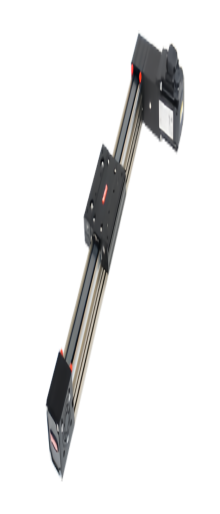
Timing Belt Linear Module Accuracy: Repeatability and Positioning
Timing belt linear modules are often chosen for long travel and high speed, but engineers frequently ask the same question before using them in positioning equipment: how accurate can a belt-driven axis really be?The answer depends on what “accuracy” means in ...