 English

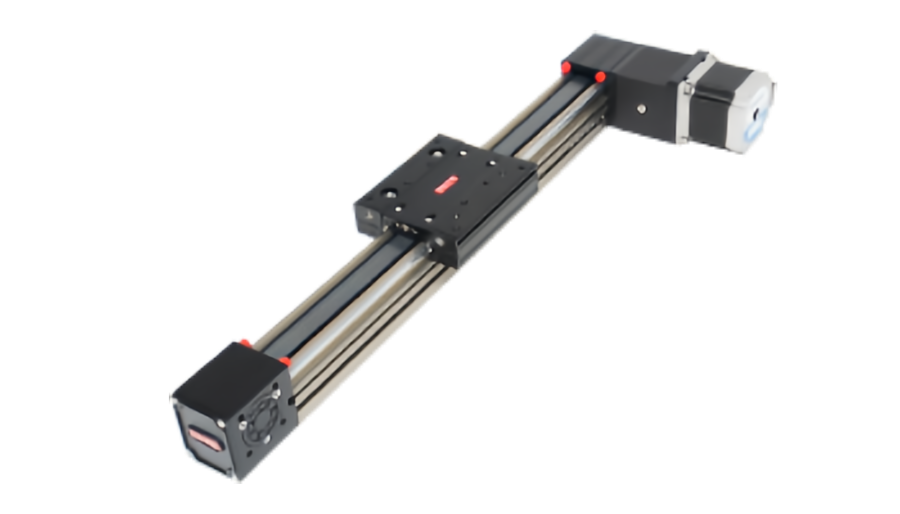
Timing belt linear modulesare widely used in semiconductor and electronics automation because they combine long travel, high speed, relatively low moving mass and simple mechanical construction. These strengths make them especially suitable for transfer, loading, PCB movement, test handling and other high-cycle tasks where repeatability and throughput matter more than ultra-fine absolute positioning.
However, not every semiconductor or electronics axis should use a timing belt. Inspection, alignment and process stages with very tight absolute accuracy, thermal stability or nanometer-to-micrometer class motion requirements may need a different drive architecture.
This guide explains where atiming belt linear module in semiconductor equipmentworks well, where its limits appear, and how to evaluate speed, payload, cleanliness, repeatability and system integration before selecting a belt-driven axis.
Why Timing Belt Modules Fit High-Speed Electronics Handling
Electronics and semiconductor machines often include many light-load movements repeated thousands or millions of times. Typical examples include:
- PCB transfer
- Tray and carrier handling
- Test-handler positioning
- Magazine loading and unloading
- Fixture transfer
- Camera or sensor movement
- Peripheral machine-to-machine transfer
Timing belt modules are attractive because the drive can achieve high linear speed without rotating a long ball screw.
Application rule:timing belt modules are strongest when the motion task is long, fast and repetitive, while the required absolute positioning accuracy remains moderate.
PCB Transfer: A Natural Application for Belt-Driven Axes
Printed circuit boards are generally light, but they may be large, flexible and sensitive to vibration. A belt-driven linear stage can move PCBs or PCB carriers efficiently between conveyors, inspection stations and assembly processes.
What matters most
- Fast acceleration and deceleration
- Stable repeatability
- Low vibration
- Controlled stop position
- Light moving structure
- Reliable sensor integration
Large PCB size can create moment load
A large PCB fixture may weigh very little but extend far beyond the center of the carriage. The resulting pitch and yaw moments can become more important than the payload itself.
The guide system should therefore be selected from both total mass and center-of-gravity location.
Semiconductor Test Handlers Need Fast, Repeatable Motion
Test handling equipment moves devices, trays, sockets and fixtures through repeated test cycles. These machines often prioritize cycle time, repeatability and long-term reliability.
Abelt module for test handlingcan be useful for:
- Tray indexing
- Device carrier transfer
- Loading and unloading
- Moving test fixtures
- Positioning peripheral inspection units
Cycle time is not just maximum speed
In short repeated moves, acceleration, deceleration and settling may dominate the total cycle. A module with a high maximum speed but poor settling behavior may not improve throughput.
For test handlers, evaluate complete move time from command start to stable process-ready position.
Tray and Magazine Handling
Semiconductor and electronics equipment often handles trays, reels, magazines or carriers rather than individual components directly.
Timing belt modules are well suited to these secondary handling tasks because:
- Travel can be relatively long.
- Payload is often light to moderate.
- High positioning frequency is common.
- Absolute coordinate accuracy may be less demanding than process-stage accuracy.
These applications are often a better fit for timing belt drive than high-precision metrology or fine alignment axes.
Electronics Assembly Transfer Between Stations
In 3C and electronics assembly, a timing belt axis can move products or fixtures between dispensing, screw-driving, inspection and assembly stations.
The main engineering advantages are:
- High transfer speed
- Efficient long-stroke motion
- Simple multi-axis integration
- Relatively low moving inertia
- Cost-effective structure for repetitive transfer
Teach-and-repeat applications are especially suitable
If the station coordinates are taught during machine commissioning, the axis often needs excellent repeatability more than very tight absolute accuracy over the entire stroke.
This matches one of the strengths of a properly tensioned timing belt stage.
High-Speed Pick and Place
Timing belt modules are commonly used in X or Y axes of pick-and-place systems where long travel and frequent reversing are required.
Important factors include:
- Moving mass
- Acceleration
- Belt stiffness
- Pulley size
- Guide stiffness
- Servo tuning
Why low moving mass matters
High-speed electronics handling benefits from lightweight carriages, compact tooling and short cable runs. Lower moving mass reduces required thrust and motor torque, making it easier to achieve aggressive cycle times.
Where Timing Belt Modules Are Less Suitable
Timing belt drive is not the best choice for every semiconductor or electronics motion task.
Applications that may require another drive type include:
- Very high absolute positioning accuracy
- Fine metrology stages
- High-stiffness bonding or pressing axes
- Very low-speed precision scanning
- Applications highly sensitive to belt elasticity
Ball screw or linear motor systems may be more appropriate depending on stroke, force, accuracy and dynamic requirements.
Do not choose timing belt drive because it is fast.Choose it when speed, stroke, repeatability and cost align with the actual process requirement.
Repeatability vs Absolute Positioning in Electronics Equipment
| Application | Primary Motion Requirement |
|---|---|
| PCB transfer | Repeatability and smooth motion |
| Tray indexing | Repeatable station positioning |
| Test handler | Cycle time and repeatability |
| Vision inspection transfer | Repeatability, settling and sometimes straightness |
| Precision measurement | Absolute positioning and geometric accuracy |
A timing belt module may perform very well in the first four applications while another technology may be better for the fifth.
Belt Elasticity Matters in Precision Positioning
Timing belts are elastic. Under changing drive force, the belt elongates slightly.
This elastic displacement increases with:
- Higher acceleration
- Higher payload
- Longer active belt length
- Lower belt stiffness
For handling and transfer, this effect may be acceptable. For coordinate-based inspection, it may become part of the error budget.
Closed-Loop Servo Control Helps, but Feedback Location Matters
A servo motor with an encoder can control motor position very accurately. However, the motor encoder does not directly measure belt stretch or carriage deflection.
For applications requiring tighter absolute positioning, a direct linear encoder can measure carriage position more directly.
This creates two different architectures:
- Motor-side closed loop: simpler and common for handling
- Direct linear feedback: more suitable for higher-accuracy stages
Cleanroom Use Requires More Than an Enclosed Cover
Semiconductor manufacturing may require controlled particle behavior, but a timing belt module should not be considered cleanroom-suitable only because it has an enclosed housing.
Potential particle sources include:
- Belt wear
- Guide lubrication
- Seals and cover strips
- Cable carriers
- Flexible cables and tubes
- Surface contamination
The final cleanroom suitability depends on the complete module design, materials, lubricant, enclosure and machine airflow.
Open vs Enclosed Belt Modules in Electronics Equipment
| Configuration | Typical Strength | Typical Limitation |
|---|---|---|
| Open belt module | Easy inspection and maintenance | More exposure to particles and contamination |
| Enclosed belt module | Better physical protection | More difficult internal inspection |
For clean electronics handling, enclosure may be useful, but cleanliness still requires system-level validation.
Lubrication Strategy in Clean Electronics Environments
The timing belt itself usually runs dry, while the linear guide requires lubrication.
For sensitive environments, guide lubrication may need to consider:
- Low particle generation
- Low volatility
- Material compatibility
- Controlled grease quantity
- Long maintenance interval
Excess grease can migrate toward the belt or process area, while insufficient lubrication reduces guide life.
ESD Requirements May Affect Integration
Electronics assembly may require electrostatic-discharge control. The linear module itself is only one part of the ESD strategy.
Machine designers may need to consider:
- Grounding of moving structures
- Static accumulation on covers and belts
- Fixture materials
- Cable and sensor grounding
- Operator and machine protection methods
Do not assume that a standard timing belt module automatically satisfies an ESD-controlled process.
Motor Selection for High-Speed Electronics Axes
Servo motors are common because they support high acceleration, closed-loop positioning and rapid direction changes.
Motor selection should check:
- Required maximum speed
- Peak torque during acceleration
- RMS torque over the cycle
- Load-to-motor inertia ratio
- Drive voltage and current
- Control-network compatibility
Stepper or closed-loop stepper motors can still be suitable for lower-dynamic transfer or fixture-adjustment axes.
Multi-Axis Belt Systems in Electronics Automation
Timing belt modules can be combined into XY, XZ and XYZ systems.
Common combinations include:
- XY PCB transfer tables
- XZ loading units
- XYZ test handling
- Dual-X gantry systems
Lower axes carry the upper axes
In an XYZ system, the X axis may need to move the entire YZ structure. The moving mass calculation must therefore include upper axes, motors, cable carriers, fixtures and products.
Multi-axis rule:size from the process tool outward. Each lower axis carries everything mounted above it.
Dual-Axis Gantries and Synchronization
Wide electronics handling systems may use two parallel belt axes supporting one crossbeam.
If both sides are driven independently, they must remain synchronized. Important considerations include:
- Parallel alignment
- Homing strategy
- Electronic synchronization
- Servo tuning
- Crossbeam stiffness
Control synchronization should not be used to compensate for poor mechanical installation.
Cable Carriers Can Affect High-Speed Motion
Electronics machines often carry many signal cables, air lines and sensor wires.
Cable carriers can add:
- Moving mass
- Variable drag force
- Vibration
- Particle generation
For high-speed belt modules, cable routing should be included in the motion design from the beginning.
Long-Term Reliability in High-Cycle Equipment
Light payload does not automatically mean low wear. A test handler or PCB transfer axis may run continuously for long periods with extremely high cycle counts.
Maintenance should monitor:
- Belt tension
- Belt tooth condition
- Guide lubrication
- Pulley alignment
- Motor current or servo torque
- Cable-carrier condition
- Positioning repeatability
A Practical Selection Sequence
- Define the process.PCB transfer, test handling, loading, inspection transfer or another task?
- Define stroke and machine space.
- Calculate moving mass and moment loads.
- Set speed, acceleration and cycle time.
- Define repeatability and absolute accuracy separately.
- Check whether belt elasticity is acceptable.
- Select belt profile, width and pulley size.
- Size motor torque, speed and inertia.
- Evaluate cleanroom or ESD requirements.
- Plan cables and sensors.
- Define maintenance based on cycle count.
What QRXQ Needs to Evaluate a Semiconductor or Electronics Belt Axis
- Application type
- Required stroke
- Moving mass
- Maximum speed and acceleration
- Target cycle time
- Repeatability requirement
- Absolute accuracy requirement if applicable
- Horizontal, vertical or gantry configuration
- Cleanroom or ESD requirement
- Motor and controller preference
- Daily cycle count
Timing belt modules are strongest in semiconductor and electronics equipment when the job requires long travel, high speed and repeatable handling rather than ultra-high absolute positioning accuracy.
QRXQ evaluates timing belt applications by matching the drive to the actual process role—transfer, handling, test, loading or peripheral automation—then checking speed, stiffness, cleanliness, feedback and long-term cycle reliability as one system.