 English

Ball screwlinear modulescan look similar from the outside while using very different internal structures. An enclosed actuator designed to protect the screw and guide, a semi-enclosed stage built for balanced cost and maintenance access, an open module optimized for simple integration, and a compact KK-style unit can all use ball screw transmission but behave differently in installation, contamination resistance, stiffness and serviceability.
Understanding the mainball screw linear module typeshelps engineers choose the right structure before comparing stroke, speed and payload. The enclosure style, guide arrangement, carriage geometry, motor position and mounting orientation all influence how the module fits into the machine.
This guide explains the majorball screw moduledesigns and the practical differences between enclosed, semi-enclosed, open and KK-type configurations.
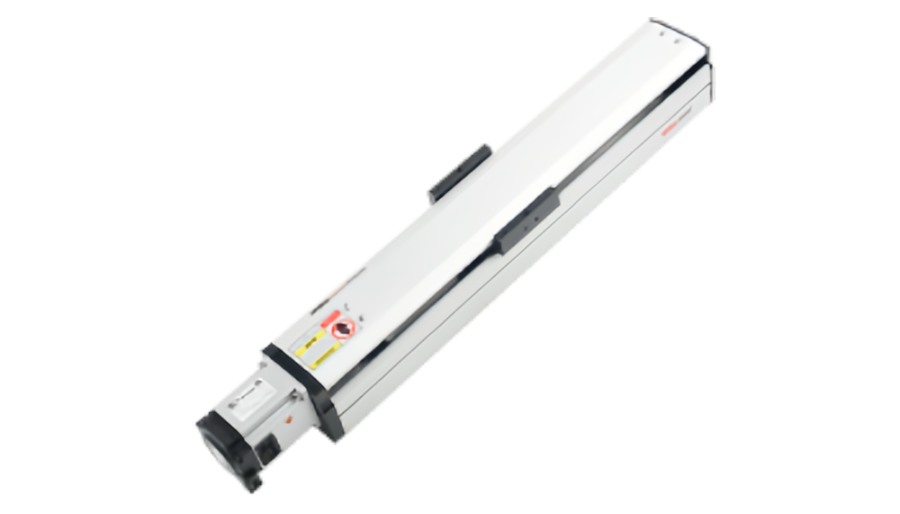
Ball Screw Modules Can Be Classified in Several Ways
There is no single universal classification system. In practice, engineers usually compare ball screw modules from several structural dimensions:
- Enclosed, semi-enclosed or open construction
- Integrated guide or external guide structure
- Single-carriage or extended-carriage design
- KK-style compact integrated module
- Inline, folded or side-mounted motor arrangement
- Horizontal, vertical, side or inverted mounting
- Single-axis or multi-axis combination
Selection principle:“ball screw module” describes the drive mechanism. Enclosure, guide structure and installation form still need to be selected separately.
Enclosed Ball Screw Linear Modules
An enclosed ball screw module uses covers, sealing strips, steel bands or integrated housings to reduce direct exposure of the screw and guide system.
Typical benefits include:
- Better protection from dust and debris
- Cleaner external structure
- Reduced accidental contact with moving components
- More controlled internal lubrication
- Improved suitability for equipment requiring higher contamination protection
Where enclosed designs are useful
They are often selected for electronics assembly, inspection equipment, packaging, light industrial automation and machines where the internal screw should be protected from process debris.
What enclosed does not automatically mean
An enclosed actuator is not automatically waterproof, dustproof to a defined IP level or cleanroom-qualified. Those claims depend on the actual sealing design, lubricant, materials and complete machine validation.
Important:enclosure mainly improves protection. It does not automatically increase positioning accuracy or payload capacity.
Semi-Enclosed Ball Screw Modules
A semi-enclosed module uses partial covers or protective structures while leaving some areas more accessible than a fully enclosed design.
This architecture often balances:
- Basic contamination protection
- Lower structural complexity
- Easier maintenance access
- Lower cost than some fully enclosed designs
- Good general-purpose automation performance
Why semi-enclosed designs are popular
Many machines do not require full protection but still benefit from keeping the ball screw and guide area partially shielded from dust, clothing fibers or accidental contact.
For this reason, semi-enclosed stages are often a practical middle ground between open and fully enclosed structures.
Open Ball Screw Linear Modules
An open ball screw module exposes more of the screw, guide or carriage structure.
Typical strengths include:
- Simple mechanical layout
- Easy inspection
- Easy lubrication access
- Lower cover-related complexity
- Convenient customization
Where open designs work well
Open stages are often suitable for clean factory environments, machine interiors, test fixtures, development equipment and applications where engineers need easy access to the screw, guide or mounting points.
Main limitation
The screw and guide are more exposed to particles, chips, fibers and liquids. If the environment is dirty, external covers, bellows or machine guarding may be required.
Enclosed vs Semi-Enclosed vs Open
| Comparison | Enclosed | Semi-Enclosed | Open |
|---|---|---|---|
| Contamination protection | Generally highest | Moderate | Lowest |
| Maintenance access | May require cover removal | Moderate | Usually easiest |
| Structural complexity | Higher | Medium | Lower |
| Typical cost direction | Higher | Medium | Lower |
| Visual inspection | Limited | Partial | Easy |
KK-Type Ball Screw Modules
A KK-style ball screw module integrates a ball screw, guide structure and carriage into a compact unit. The screw and guide functions are packaged tightly to reduce overall size and simplify installation.
Typical characteristics include:
- Compact cross-section
- Integrated guidance
- Good stiffness for size
- Simple machine mounting
- Convenient use in compact automation
Where KK-style modules are useful
- 3C electronics equipment
- Inspection machines
- Small assembly systems
- Compact XY stages
- Fixture positioning
Because “KK” is often used as a general market term for compact integrated screw stages, exact structure and specifications should be confirmed by manufacturer rather than assumed from the name alone.
KK-Type vs Conventional Ball Screw Module
| Feature | KK-Type | Conventional Module |
|---|---|---|
| Packaging | Very compact | More flexible in profile size |
| Guide integration | Highly integrated | Can use larger or wider guide arrangements |
| Customization | Often more standardized | Usually more flexible |
| Heavy moment load | Depends strongly on size | Wider-body designs can offer more options |
Single-Guide and Wide-Guide Structures
Ball screw modules can use different guide layouts depending on required load and moment capacity.
A compact module may use one integrated guide track, while a wider module may use two rails or wider guide spacing.
Why guide spacing matters
Wider guide spacing generally improves resistance to pitch, yaw and roll moments.
This is useful when carrying:
- Wide fixtures
- Offset tools
- Cross-axis assemblies
- Heavy mounting plates
A larger motor does not compensate for insufficient guide moment capacity.
Single-Carriage Ball Screw Modules
The standard configuration uses one moving carriage driven by one ball screw nut.
This is suitable for:
- Single-tool positioning
- Fixture movement
- Pick-and-place axes
- Inspection stages
- XY and XYZ combinations
Extended or Long-Carriage Designs
A longer carriage increases the distance between effective bearing points and can improve moment resistance.
This is useful when:
- The payload center of gravity is offset
- The tool plate is wide
- The upper axis creates a large overturning moment
The trade-off is increased carriage length and reduced available travel inside a fixed module length.
Dual-Carriage or Multi-Carriage Configurations
Some ball screw stages use more than one carriage to support long tooling plates or distribute moment load.
Depending on design, the carriages may:
- Share one moving plate
- Be linked mechanically
- Use separate drive systems
The relationship between carriages should be confirmed before assuming they can move independently.
Standard Ball Screw Modules
Standard-profile modules are general-purpose axes intended to balance stiffness, stroke, cost and integration.
They are commonly used in:
- Industrial assembly
- Inspection
- Machine loading
- Dispensing
- Screw driving
- Component positioning
Compact Ball Screw Modules
Compact modules reduce body width, height or motor envelope.
They are useful when equipment space is limited, but designers should still verify:
- Guide moment capacity
- Maximum screw speed
- Motor installation space
- Lubrication access
- Cable routing
Compactness should not be selected at the expense of stiffness needed by the process.
Heavy-Duty Ball Screw Modules
Heavy-duty stages typically use larger profiles, larger guide systems, larger screw diameters or wider bearing spacing.
They are designed for applications with:
- Higher payload
- Higher moment load
- Higher thrust
- Larger tooling plates
- More demanding structural stiffness
Heavy-duty does not necessarily mean higher speed. Larger screws and moving structures can increase rotational and moving inertia.
High-Precision Ball Screw Modules
A high-precision configuration may use tighter screw lead accuracy, preload, precision bearings, improved guide accuracy and stricter assembly control.
However, “precision grade” is not universally defined across manufacturers.
Always confirm:
- Positioning accuracy
- Repeatability
- Backlash
- Straightness
- Test stroke
- Measurement method
Motor Arrangement Changes the Module Configuration
Ball screw modules can use several motor arrangements.
Inline motor
The motor is mounted in line with the screw. This provides a simple drive path but increases total module length.
Folded or side-mounted motor
The motor is placed beside the module and drives the screw through a belt or other transmission.
This reduces total length and can fit compact machine layouts.
Trade-offs may include:
- Additional transmission components
- Different inertia
- Additional maintenance points
Direct Coupling vs Gear Reduction
Many ball screw stages couple the motor directly to the screw.
A gearbox may be added when the application needs:
- Higher torque
- Different motor-speed range
- Inertia matching
Gear reduction can increase available screw torque but also adds backlash, efficiency loss and mechanical complexity depending on gearbox type.
Horizontal Mounting
Horizontal mounting is common and generally straightforward.
Important checks include:
- Payload
- Center-of-gravity position
- Moment loads
- Acceleration
- Base support flatness
Vertical Ball Screw Modules
Ball screw modules are frequently used vertically because screw transmission provides predictable thrust and controlled positioning.
Vertical selection should consider:
- Gravity load
- Motor brake
- Backdriving behavior
- Regenerative energy
- Safety against uncontrolled descent
Safety note:a motor holding brake is not automatically a safety-rated anti-fall device. Machine-level safety requirements must be evaluated separately.
Side-Mounted and Inverted Configurations
Ball screw modules can be installed on their side or inverted when machine space requires it.
This changes the guide loading condition and may affect:
- Allowable moment load
- Lubricant distribution
- Seal behavior
- Contamination entry path
- Cable routing
Use load data for the actual mounting orientation.
Single-Axis Ball Screw Modules
A single-axis stage provides one controlled linear degree of freedom.
It is commonly used for:
- Positioning
- Tool adjustment
- Dispensing
- Press approach
- Inspection
XY Ball Screw Stages
Two perpendicular screw-driven axes create an XY positioning system.
This arrangement is useful for:
- Inspection
- Precision assembly
- Dispensing
- Electronics manufacturing
The lower axis must carry the complete upper axis, motor, fixture and workpiece.
XYZ and Mixed-Drive Systems
A full Cartesian system may use ball screw modules on all axes, but it does not have to.
For example:
- Ball screw Z axis for vertical stiffness
- Timing belt X axis for long high-speed travel
- Ball screw Y axis for precise cross positioning
Mixed-drive systems can optimize each axis for its own job.
How to Choose Between Ball Screw Module Types
| Application Need | Configuration to Evaluate |
|---|---|
| Better contamination protection | Enclosed module |
| Balanced protection and service access | Semi-enclosed module |
| Easy maintenance and low complexity | Open module |
| Very compact automation | KK-style or compact integrated module |
| Large moment load | Wide-guide or extended-carriage module |
| Higher payload and thrust | Heavy-duty module |
| Tight machine length | Folded-motor configuration |
| Vertical precision movement | Ball screw module with suitable brake/safety design |
Common Selection Mistakes
Assuming enclosed means more accurate
Enclosure mainly changes protection. Accuracy comes from screw, guide, bearings, assembly and feedback.
Choosing KK type only because it is compact
Compactness must still meet load, moment, stroke and maintenance requirements.
Ignoring carriage moment capacity
A payload may be within the nominal load rating but still overload the guide because the center of gravity is far from the carriage.
Using a long screw without checking critical speed
Long-stroke screw axes can become limited by screw rotational dynamics.
Mounting vertically without reviewing power-loss behavior
Gravity, brake and safety must be checked separately.
Choosing enclosure from appearance alone
Protection should match contamination risk and maintenance strategy.
What QRXQ Needs to Recommend a Ball Screw Module Type
- Required stroke
- Payload and tooling mass
- Center-of-gravity position
- Maximum speed and acceleration
- Required thrust
- Positioning accuracy and repeatability
- Horizontal, vertical, side or inverted mounting
- Clean, dusty or contaminated environment
- Available installation space
- Motor orientation preference
- Single-axis or multi-axis structure
- Daily operating cycle
The best ball screw module type is determined by the complete machine layout.Enclosure, guide width, carriage geometry, motor arrangement and mounting direction can matter just as much as screw diameter and stroke.
QRXQ evaluates ball screw linear module configurations from application load, precision, environment and installation structure, then matches enclosed, semi-enclosed, open, KK-style or heavier-duty designs to the actual machine requirement.