 English

Linear Modules Knowledge Center
Total 33 Articles
Linear Module Structure Explained: Components and Mechanical Design
The structure of a linear module is designed to convert rotary or electromagnetic power into smooth, accurate, and repeatable linear motion. Unlike a simple linear guide or actuator, a complete linear module integrates multiple mechanical and control component...
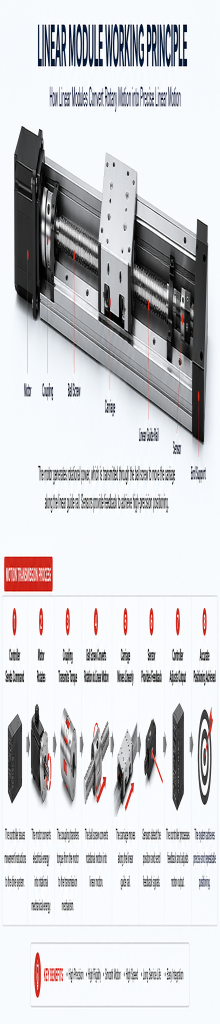
Linear Module Working Principle Explained
Linear modules are one of the most widely used motion systems in modern industrial automation. From CNC machinery and semiconductor manufacturing to robotic assembly and automated inspection equipment, these precision devices convert rotary or electromagnetic ...

How to Choose a High-Precision Linear Module
Linear modules and linear motors are both widely used to create controlled linear motion in industrial automation systems. They can be found in assembly equipment, semiconductor machinery, packaging lines, inspection systems, laser processing machines, materia...
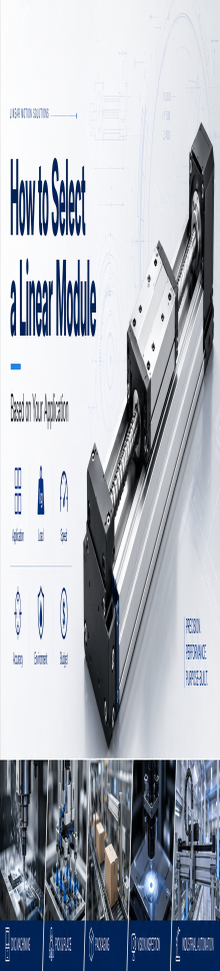
How to Select a Linear Module Based on Your Application
Selecting the correct linear module is not simply a matter of choosing the largest payload, highest speed, or highest positioning accuracy from a product catalog. A reliable linear motion solution must match the actual operating conditions of the machine, incl...
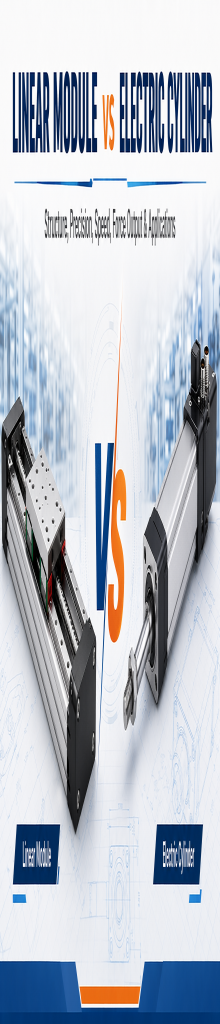
Linear Module vs Pneumatic Cylinder: Which Motion Solution Is Better?
A linear module and an electric cylinder are both widely used to generate controlled linear motion in industrial automation. They can be driven by servo motors or stepper motors, connected to motion controllers, and integrated into automated equipment for posi...

Linear Module vs Electric Cylinder: How to Choose the Right Linear Actuator
A linear module and a linear guide are both essential components in industrial linear motion systems, but they perform fundamentally different functions. A linear guide mainly supports and guides a moving load along a straight path, while a linear module is a ...
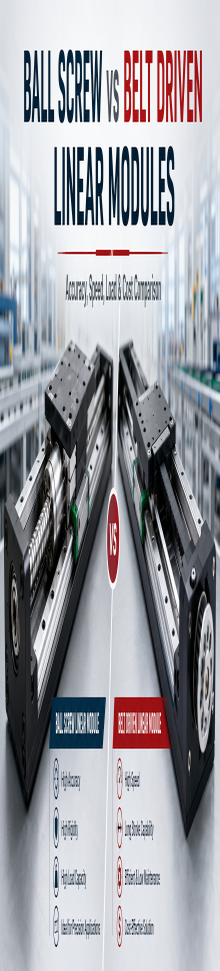
Ball Screw vs Belt Driven Linear Modules: Which One Should You Choose?
Choosing between a ball screw linear module and a belt driven linear module is one of the most important decisions when designing an automated linear motion system. Although both types convert motor rotation into controlled linear movement, they offer signific...
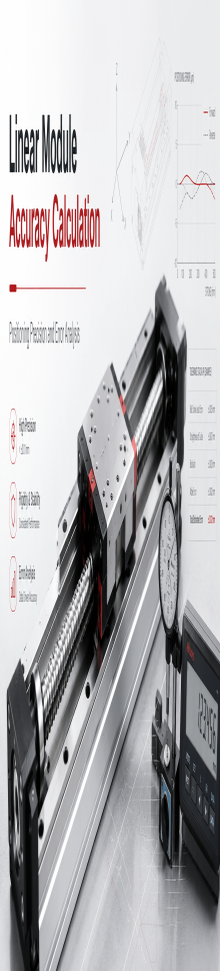
Linear Module Accuracy Calculation: Understanding Positioning Precision and Errors
Accuracy is one of the most important performance indicators when selecting or designing a linear motion system. In semiconductor equipment, vision inspection machines, electronics assembly lines, precision dispensing systems, CNC machinery, and laboratory aut...
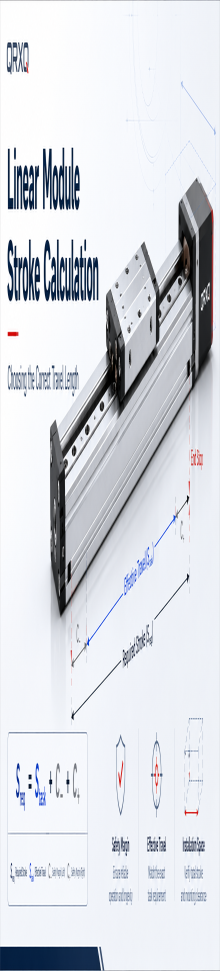
Linear Module Stroke Calculation: Choosing the Correct Travel Length
A linear module stroke calculation converts the workpiece motion, tooling geometry, end clearances, stopping behavior, and machine envelope into one required travel length. The number is not simply the distance between two process points. The module carriage m...
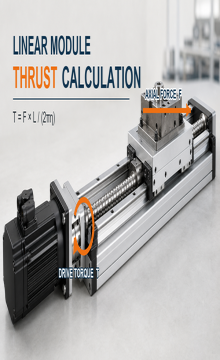
Linear Module Thrust Calculation: Selecting the Right Drive Force
A linear module thrust calculation answers a practical design question: how much axial force must the drive produce at every part of the motion cycle? The answer is not simply the payload weight. Acceleration, gravity, process force, guide and seal resistance,...