 English

A timing belt linear module has two maintenance systems that should not be confused: the linear guide usually requires lubrication, while the timing belt itself normally operates dry and should not be coated with grease or oil unless the belt manufacturer specifically requires it.
This distinction is important because improper maintenance can create more problems than it solves. Grease on the belt can attract dust, contaminate pulley surfaces and affect belt materials, while insufficient guide lubrication can increase friction, noise and wear.
This guide explainstiming belt linear module lubrication, belt tension maintenance, guide lubrication, inspection intervals and the warning signs that indicate a belt-driven stage needs adjustment or component replacement.
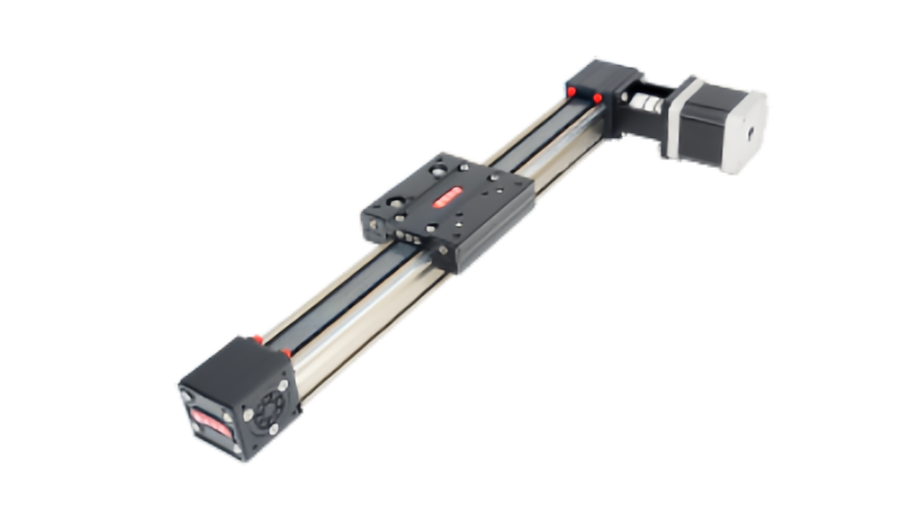
What Actually Needs Lubrication on a Timing Belt Module?
A typical belt-driven linear module contains several components, but they do not all use the same maintenance method.
| Component | Typical Maintenance | Lubrication? |
|---|---|---|
| Linear guide and carriage | Periodic grease or oil according to guide specification | Usually yes |
| Timing belt | Inspect tension, teeth, edges and contamination | Normally no |
| Drive and idler pulleys | Inspect alignment, wear and bearing condition | Usually no external lubrication on belt-contact surfaces |
| Pulley bearings | Depends on bearing design | Often sealed or pre-lubricated |
| Motor coupling or reduction stage | Follow component-specific instructions | Depends on design |
| Seals and cover strips | Inspect for damage and contamination | Normally no routine lubrication |
Basic rule:lubricate the linear guide, not the timing belt. Do not spray oil or grease onto belt teeth as a general maintenance practice.
Why the Timing Belt Usually Runs Dry
Timing belts transmit force through engagement between the belt teeth and pulley grooves. They are designed to run without a lubricating film on the tooth surface in most industrial linear-motion applications.
Applying grease or oil to the belt can create several problems:
- Dust and particles can stick to the belt surface.
- Contamination can accumulate in pulley grooves.
- Some lubricants may be incompatible with belt materials.
- The belt can become difficult to inspect visually.
- Excess lubricant can migrate to sensors, covers and nearby products.
If a belt surface appears dry, that is not by itself a sign that lubrication is missing. Belt condition should be judged by wear, cracking, tooth condition, tracking and tension.
Linear Guide Lubrication Is Still Essential
The timing belt provides drive force, but the carriage load is usually carried by a linear guide, integrated track or roller guide. That guide system controls stiffness, straightness and running friction.
If the module uses recirculating linear guide blocks, correct lubrication helps:
- Reduce rolling friction
- Protect raceways from wear
- Reduce heat generation
- Support smooth ball circulation
- Protect surfaces from corrosion
Where is grease added?
Depending on the module design, lubrication may be applied through grease nipples, ports in the carriage, centralized grease lines or access points exposed when the carriage moves to a service position.
Some enclosed timing belt modules hide the lubrication points behind covers, so maintenance access should be considered during machine design.
Choosing Grease for the Guide System
There is no single “belt module grease” that is correct for every product. The grease is selected for the guide system, not for the timing belt.
When choosing grease, check:
- Guide manufacturer's specified lubricant
- Base oil and thickener compatibility
- Operating temperature
- Speed and duty cycle
- Load level
- Cleanroom or low-particle requirements if applicable
- Water, coolant or chemical exposure
Do not mix greases casually.Different thickeners and additive packages can be incompatible and may change consistency or lubrication performance.
How Much Grease Should Be Added?
More grease does not automatically improve guide life.
Over-greasing can cause:
- Higher carriage resistance
- Temporary motor current increase
- Grease leakage from seals
- Dust accumulation around the carriage
- Grease migration toward the timing belt
Under-greasing can cause:
- Dry-running noise
- Higher friction
- Temperature rise
- Accelerated guide wear
Use the module or guide manufacturer's recommended quantity whenever available. A metered grease gun is more reliable than adding grease until it visibly escapes from the seals.
A Practical Guide-Lubrication Procedure
- Identify the lubrication port.Confirm that the port supplies the guide and not another component.
- Make the machine safe.Prevent unexpected movement before accessing the axis.
- Clean the port area.Remove dust and old contaminated grease around the fitting.
- Confirm the lubricant.Check the grease name and compatibility before application.
- Add the specified quantity slowly.Avoid high-pressure overfilling.
- Move the carriage through the stroke as permitted.This helps distribute fresh lubricant through the guide raceway.
- Wipe away excess grease.Prevent it from reaching the timing belt or pulley.
- Run the axis at low speed.Check noise, resistance and leakage before returning to production.
- Record the service.Note date, lubricant type and machine operating condition.
Timing Belt Tension Is a Maintenance Item
Unlike guide lubrication, belt maintenance focuses heavily on tension.
Timing belt tension must be high enough to maintain tooth engagement and positioning stability, but excessive tension increases load on the belt, pulley bearings and drive system.
If the belt is too loose
Possible symptoms include:
- Poor positioning consistency
- Belt vibration
- Tooth jump under acceleration
- Noise during reversal
- Increased backlash-like behavior
If the belt is too tight
Possible consequences include:
- Higher bearing load
- Increased motor torque demand
- Accelerated belt fatigue
- Higher running resistance
- Additional load on the module structure
Correct tension is not “as tight as possible.”Use the manufacturer's tension value or approved measurement method.
How Should Belt Tension Be Checked?
Different module and belt designs use different methods. Common methods can include specified belt deflection, force-deflection measurement, frequency measurement or factory adjustment references.
The important point is consistency. If the original tension was set using one method, later maintenance should ideally use the same approved method.
When should tension be rechecked?
Useful inspection points include:
- After initial run-in if specified by the manufacturer
- After belt replacement
- After pulley or motor adjustment
- When positioning behavior changes
- When abnormal belt vibration appears
- When the belt shows tracking or edge-wear problems
Belt Tracking and Alignment
A timing belt should run consistently on the pulley path. Persistent movement toward one pulley edge can indicate alignment or tension problems.
Common causes of poor tracking include:
- Pulley misalignment
- Uneven tension
- Damaged pulley flanges
- Contamination in pulley grooves
- Belt edge damage
- Improper installation after replacement
Do not treat edge wear as a normal condition if it continues to increase.
Inspect the Belt Teeth, Not Only the Belt Back
The tooth side carries the drive load and can reveal early problems.
During inspection, look for:
- Tooth wear
- Missing or damaged teeth
- Cracks near tooth roots
- Polished or abnormal wear patterns
- Debris embedded in the belt
- Fraying at the edges
- Visible tensile-member damage
If the belt has been contaminated by oil, coolant or process chemicals, verify material compatibility before continuing operation.
Pulley Condition Matters to Belt Life
A new belt installed on worn or damaged pulleys may not achieve its expected service life.
Check:
- Pulley tooth wear
- Groove contamination
- Flange damage
- Radial runout
- Bearing noise
- Shaft looseness
- Fastener condition
If pulley alignment or bearing condition is poor, replacing the belt alone may only provide a temporary improvement.
Open and Enclosed Modules Need Different Inspection Habits
Open timing belt modules
Open modules are easier to inspect visually, but the belt and guide are more exposed to dust and debris. Cleaning frequency may therefore be more important.
Enclosed timing belt modules
Enclosed modules protect internal components better, but problems can remain hidden longer. Maintenance should include inspection of cover strips, seals and internal areas according to the product design.
A cover that looks intact externally does not guarantee that the internal belt is free from contamination.
How Often Should a Timing Belt Linear Module Be Inspected?
There is no universal inspection interval.
A useful schedule should consider:
- Cycles per hour
- Daily operating time
- Travel distance per cycle
- Acceleration and deceleration
- Payload and moment load
- Ambient temperature
- Dust and contamination
- Vertical or unusual mounting orientation
A light-load module operating once every minute does not experience the same wear exposure as a high-speed axis reversing every two seconds.
Use Different Intervals for Different Maintenance Tasks
| Maintenance Task | Typical Trigger |
|---|---|
| Visual belt inspection | Regular production inspection or abnormal noise |
| Guide relubrication | Manufacturer interval adjusted for actual duty |
| Belt tension check | Scheduled maintenance, replacement or behavior change |
| Pulley inspection | Belt replacement or tracking problem |
| Fastener inspection | High-cycle or high-acceleration service |
| Sensor check | Positioning or homing inconsistency |
The goal is not to perform every maintenance task at the same calendar interval. Each component should be inspected according to its actual wear mechanism.
High-Cycle Applications Need More Attention to Trend Changes
In packaging, pick-and-place and 3C automation, a timing belt axis may complete millions of reversals over its operating life.
Useful trends to monitor include:
- Motor current or servo torque
- Cycle time
- Positioning consistency
- Noise level
- Belt vibration
- Carriage temperature
A gradual increase in torque or noise can be an early warning of guide lubrication loss, belt tension change, pulley bearing wear or contamination.
Vertical Timing Belt Modules Need Extra Checks
In vertical service, the belt continuously supports the suspended moving load. Maintenance should therefore pay additional attention to:
- Belt condition
- Tension stability
- Motor brake function
- Holding behavior
- Pulley and shaft condition
- Emergency or power-loss behavior
If uncontrolled descent could create a hazard, the machine requires an appropriate safety design beyond routine belt maintenance.
Contamination Control Extends Both Belt and Guide Life
Dust and particles affect the guide and belt differently.
On the guide, contamination can enter the raceway and accelerate precision-surface wear. On the belt, debris can become trapped in pulley grooves and damage tooth engagement.
Maintenance should include:
- Removing loose debris from the module
- Keeping pulley grooves clean
- Inspecting seals and cover strips
- Checking bellows or protective covers
- Preventing coolant or oil spray from reaching the belt
- Controlling cable-carrier debris
Use compressed air carefully
High-pressure air can push particles deeper into guide blocks, pulley areas or enclosed modules. Controlled vacuuming and wiping are often safer around precision motion components.
Signs That Maintenance Is Needed
Inspect thetiming belt moduleif you notice:
- New clicking, rubbing or squealing noise
- Visible belt vibration
- Increasing positioning error
- Higher motor current or servo torque
- Belt edge fraying
- Cracks or tooth damage
- Abnormal belt tracking
- Grease reaching the belt area
- Rough carriage motion
- Loose pulley, motor or carriage fasteners
These symptoms should be investigated systematically. Adding grease or tightening the belt without identifying the cause can make the problem worse.
When Should the Timing Belt Be Replaced?
Belt replacement should be based on condition and the manufacturer's service criteria rather than age alone.
Replacement should be considered when there is:
- Cracking
- Missing or damaged teeth
- Severe edge wear
- Visible tensile-member damage
- Permanent deformation
- Contamination that cannot be safely removed
- Repeated loss of tension
- Performance no longer meeting the process requirement
If a belt fails unusually early, inspect pulley alignment, tension setting, acceleration, load and environmental contamination before installing another belt.
After Replacing a Belt, Recheck the Whole Drive
A belt replacement is a good opportunity to inspect the complete transmission.
- Inspect drive and idler pulleys.
- Check pulley alignment.
- Check pulley bearing condition.
- Clean pulley grooves.
- Install the correct belt specification.
- Set belt tension using the approved method.
- Check tracking at low speed.
- Verify full-stroke movement.
- Check positioning behavior.
- Record the replacement date and reason.
A Practical Timing Belt Module Maintenance Checklist
- The timing belt is clean and free from oil or grease.
- Belt teeth show no cracking, tearing or abnormal polish.
- Belt edges are not fraying.
- Belt tracking remains centered and stable.
- Tension is within the approved range.
- Pulleys are aligned and free from contamination.
- Pulley bearings show no abnormal noise or looseness.
- Linear guide lubrication is current.
- Excess guide grease has not migrated toward the belt.
- Fasteners remain secure.
- Home and limit sensors operate consistently.
- Motor current, noise and positioning behavior remain normal.
What QRXQ Needs for a Maintenance Recommendation
For a more specific timing belt module maintenance recommendation, provide:
- Module model
- Stroke
- Payload
- Maximum speed and acceleration
- Horizontal or vertical mounting
- Daily cycle count or operating hours
- Working environment
- Current lubricant type
- Current belt condition
- Any abnormal noise, vibration or positioning change
The key maintenance distinction is simple:guide lubrication protects the rolling guidance system; belt maintenance focuses on tension, alignment, cleanliness and physical condition.
QRXQ recommends maintaining timing beltlinear modulesaccording to the actual duty cycle and module structure rather than applying one fixed service interval to every belt-driven stage.