 English

3C electronics production—computers, communication products and consumer electronics—depends on large numbers of short, repeatable automation cycles. A phone frame may need to be transferred, positioned for dispensing, moved to a screw-driving station and then presented to a vision inspection system, all within a tightly controlled takt time.
This makeslinear modules in 3C electronicsdifferent from many heavy industrial axes. The loads are often moderate, but the system may run at high cycle rates and require consistent positioning, smooth acceleration, compact installation, low vibration and rapid product changeover.
This guide looks at howlinear modulesare used in phone assembly, PCB handling, dispensing, screw driving and automated inspection, and explains which motion characteristics matter most in each process.
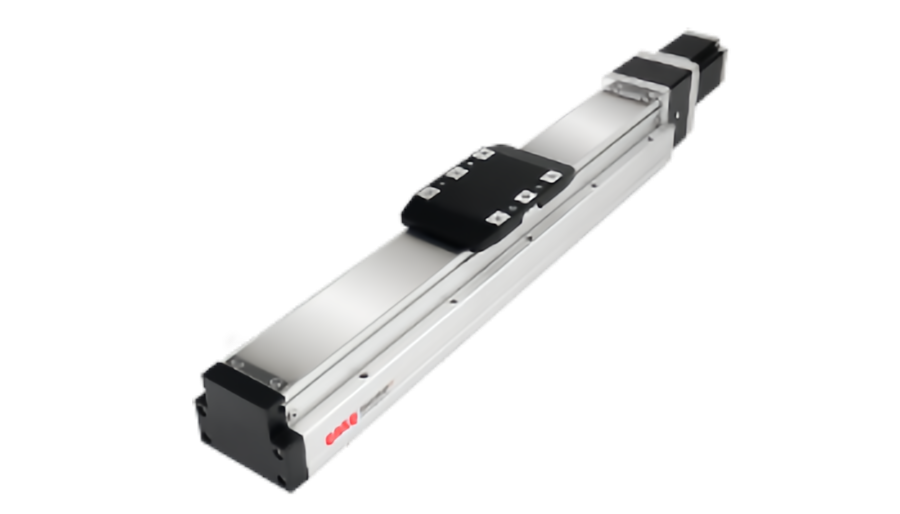
Why Linear Modules Fit 3C Electronics Automation
Electronics production lines contain many tasks that are naturally linear: moving a tray between stations, positioning a PCB under a camera, carrying a dispensing head across a housing, or shifting a screwdriver between multiple fastening points.
Linear modules are useful because they combine guidance and drive into a compact axis that can be arranged as:
- Single-axis transfer units
- XY positioning stages
- XZ pick-and-place mechanisms
- XYZ dispensing or screw-driving systems
- Dual-axis gantries
- Adjustable fixture and inspection stages
3C automation principle:high throughput usually comes from balancing acceleration, settling time and repeatability—not from choosing the highest catalog speed alone.
Phone Assembly: Many Small Motions, One Tight Cycle
Smartphone and consumer-electronics assembly contains multiple positioning tasks around frames, covers, cameras, batteries, connectors and subassemblies.
A linear module may be used to:
- Transfer housings between fixtures
- Position components under assembly tools
- Move cameras or sensors for inspection
- Carry dispensing heads
- Position electric screwdrivers
- Adjust fixtures for different product variants
Why repeatability often matters more than extreme absolute accuracy
Many assembly stations teach or calibrate working coordinates during commissioning. Once those coordinates are established, the process mainly needs the axis to return to them consistently.
This makes repeatability, backlash control and settling behavior especially important. Absolute accuracy still matters in coordinate-based processes, but it should be specified only where the process genuinely requires it.
Compactness is part of the design
3C production equipment is often densely packed. The linear module may need to fit under a fixture, beside another axis or inside a guarded workstation while leaving access for cables, sensors and maintenance.
Motor orientation, folded drive layouts and carriage dimensions can therefore be as important as stroke and load.
PCB Handling: Speed Without Board Damage
Printed circuit boards are light compared with many industrial workpieces, but they can be flexible and sensitive to impact, contamination and handling stress.
APCB handling linear stagemay move bare boards, assembled PCBs, trays or carriers between conveyors, inspection stations and assembly processes.
Motion should avoid unnecessary shock
Rapid acceleration can improve cycle time, but abrupt motion may cause board vibration, component movement or fixture instability. The best motion profile is usually one that reaches the required takt time while keeping the board and fixture stable.
Large boards create moment loads
A PCB may weigh very little but extend far beyond the center of the carriage. Wide fixtures, vacuum plates and edge-gripping mechanisms can create pitch and yaw moments that are much larger than the payload number suggests.
Guide capacity should therefore be checked from both mass and center-of-gravity position.
Dispensing: Motion Quality Directly Affects the Bead
Dispensing is one of the clearest examples of why linear motion quality matters in electronics assembly.
A dispensing axis may apply:
- Adhesive
- Thermal interface material
- Sealant
- Underfill
- Potting compound
- Conductive or protective material
Constant motion matters during continuous dispensing
If the nozzle speed varies while material flow remains constant, bead width and deposited volume can change. For path-based dispensing, the axis should therefore maintain smooth velocity through the programmed path.
Important motion characteristics include:
- Low speed ripple
- Stable acceleration and deceleration
- Repeatable path positioning
- Low vibration at corners and reversals
- Consistent Z height where gap control matters
Settling time matters in dot dispensing
For discrete dots, the nozzle often moves to a coordinate, stops, dispenses and moves again. In this case, short settling time can have a large effect on cycle time.
Dispensing rule:specify the process as either continuous-path or point-to-point dispensing. The best motion profile and drive choice may be different.
Screw Driving: The Axis Must Position and Resist Reaction Loads
Automated screw-driving systems often use XY or XYZ linear modules to move an electric screwdriver over multiple fastening positions.
Typical requirements include:
- Repeatable hole positioning
- Short movement time between screws
- Stable Z-axis approach
- Controlled pressing or seating motion
- Structural stiffness against reaction forces
The screwdriver load is more than its weight
The Z axis may experience process force when the bit contacts the screw and product. The supporting X and Y axes may also see moment loads from the screwdriver assembly and vertical reaction.
For long screwdriver brackets or offset tools, structural deflection can shift the bit even when the carriage itself reaches the correct coordinate.
Cycle time accumulates across many screws
A product with twelve screws may require the positioning move to repeat twelve times. Saving a small amount of move-and-settle time at each position can therefore have a meaningful effect on total station takt time.
Automated Inspection: Positioning and Imaging Must Work Together
Vision systems are widely used in electronics assembly to inspect dimensions, component presence, connector position, surface defects, labels and assembly quality.
Linear modules may move:
- The product under a fixed camera
- The camera over a stationary product
- Lighting or optical components
- Measurement probes or sensors
Inspection axes may need different accuracy metrics
Repeatability is important when the camera must return to the same field of view. Positioning accuracy becomes more important when image coordinates are tied to an external measurement system.
For scanning inspection, straightness and constant velocity may matter as much as point positioning.
| Inspection Method | Important Motion Characteristic |
|---|---|
| Stop-and-capture imaging | Repeatability and short settling time |
| Continuous line scan | Constant velocity and smooth motion |
| Dimensional measurement | Position accuracy and geometric stability |
| Multi-angle inspection | Repeatable multi-axis coordination |
One Assembly Line May Need Several Different Linear Module Types
It is common for a single electronics machine to combine different drive technologies rather than use one module type everywhere.
| Motion Need | Possible Drive Direction | Why |
|---|---|---|
| Compact precision positioning | Ball screw | Good rigidity and repeatable mechanical transmission |
| Long, fast transfer | Timing belt | High linear speed and efficient long travel |
| Very high dynamic precision | Linear motor | Direct drive and fast response |
| Long structural axis | Rack and pinion where appropriate | Scalable travel length |
The correct choice depends on the actual task, not on a rule that one transmission is always “more advanced.”
Ball Screw Modules in Electronics Assembly
Ball screw modulesare common in dispensing, screw driving, inspection and precise fixture positioning.
They are useful when the application needs:
- Good repeatability
- High stiffness
- Controlled low-speed motion
- Compact stroke
- Predictable thrust behavior
For high-cycle operation, screw speed, lubrication, preload and thermal behavior should also be checked.
Timing Belt Modules for High-Speed Transfer
Timing belt modulesare attractive for longer transfer axes because they can achieve high travel speeds without rotating a long screw.
Typical applications include:
- Tray transfer
- PCB movement
- Long-axis pick and place
- Loading and unloading
- Gantry X axes
Belt tension, acceleration, carriage load and pulley size affect dynamic behavior. For precision applications, the effect of belt elasticity should also be considered.
Linear Motor Modules for High-Dynamic Electronics Equipment
Direct-drive linear motor modules remove screw, belt and gear transmission from the force path.
Potential benefits include:
- High acceleration
- Fast reversal
- No transmission backlash from a screw or belt
- Compatibility with high-resolution linear feedback
- Reduced mechanical transmission wear
They can be useful in demanding inspection, alignment and precision assembly systems, but require appropriate thermal design, feedback and servo control.
High Throughput Is a Combination of Several Times
Cycle time is not only the time spent moving from point A to point B.
A realistic station cycle may contain:
- Acceleration
- Travel
- Deceleration
- Settling
- Dispensing, fastening or inspection
- Return movement
- Product transfer or fixture exchange
Improving only maximum speed may produce little benefit if the process spends more time settling or waiting for tooling.
Repeatability, Accuracy and Settling Should Be Specified Separately
Electronics automation often uses the word “precision” to describe several different performance characteristics.
| Metric | Why It Matters in 3C Assembly |
|---|---|
| Repeatability | Returns the tool or product consistently to taught positions |
| Positioning accuracy | Matches actual position to commanded coordinates |
| Backlash | Affects bidirectional positioning and frequent reversal |
| Straightness | Matters for scanning, dispensing and optical alignment |
| Settling time | Determines how soon the process can start after a move |
Specifying the right metric avoids paying for a higher nominal accuracy grade that does not improve the actual process.
Quick Product Changeover Is a Major 3C Requirement
Consumer electronics change rapidly, and the same assembly equipment may need to support different models or variants.
Linear modules can support flexible changeover through:
- Programmable positions
- Servo recipe changes
- Adjustable fixture spacing
- Motorized width adjustment
- Multiple stored dispensing or screw patterns
- Modular XY or XYZ stations
Design for changeover at the beginning
If the machine is likely to handle several products, stroke margin, sensor locations, fixture interfaces and cable routing should allow future adjustment. A module sized with no remaining travel or load margin can make later product changes difficult.
ESD and Cleanliness Considerations
Electronics assembly may include electrostatic-discharge controls and cleanliness requirements that affect material selection, grounding and machine integration.
The motion system may need attention to:
- Grounding of moving structures
- Static accumulation on covers, belts or fixtures
- Particle generation from guides, belts and cable carriers
- Lubricant control
- Dust protection
- Cleaning compatibility
A standard industrial linear module should not automatically be assumed to satisfy a specific ESD or clean-environment requirement. These conditions need to be evaluated as part of the complete machine.
Vibration Can Reduce Both Quality and Throughput
Low vibration is important for dispensing, camera inspection, precision screw engagement and delicate component handling.
Vibration can come from:
- Aggressive acceleration
- Flexible machine frames
- Long tooling overhang
- Loose couplings or fasteners
- Poor servo tuning
- Belt resonance
- Cable-carrier forces
The machine should be tuned as a complete mechanical system. Increasing servo gain cannot fully compensate for a flexible fixture or weak frame.
Multi-Axis Electronics Equipment Must Be Sized Hierarchically
XYZ dispensing and screw-driving systems are common in 3C manufacturing.
The Z axis carries the tool. The Y axis carries the Z axis and tool. The X axis may carry the complete YZ assembly.
Multi-axis rule:calculate moving mass from the process tool outward. Lower axes must carry everything mounted above them.
This becomes especially important when several screwdrivers, cameras or dispensing valves are mounted on the same cross-axis.
Motor Selection: Servo or Stepper?
Servo motors are common in high-cycle electronics automation because they support fast acceleration, closed-loop feedback and multi-axis synchronization.
They are often preferred for:
- High-speed pick and place
- Dynamic dispensing
- Multi-axis screw driving
- Vision inspection stages
- Frequent product changeover
Stepper or closed-loop stepper motors can still be suitable for fixture adjustment, indexing and lower-dynamic axes where speed and load are predictable.
Maintenance Should Be Designed Around Cycle Count
3C automation may complete a very large number of cycles even when the moving load is light.
Maintenance planning should consider:
- Total travel distance
- Cycle count
- Acceleration frequency
- Guide and screw lubrication
- Belt condition and tension
- Cable-carrier life
- Sensor repeatability
- Contamination around the motion system
A light-duty axis running every few seconds can accumulate more wear exposure than a heavier axis that moves only occasionally.
A Practical Selection Sequence for 3C Electronics
- Define the process.Handling, dispensing, screw driving, inspection or fixture adjustment?
- Define the product and tooling mass.
- Set the stroke and machine envelope.
- Define takt time and motion profile.
- Separate repeatability, accuracy and settling requirements.
- Check center-of-gravity and moment loads.
- Select ball screw, timing belt, direct drive or another suitable transmission.
- Size the motor for torque, speed and inertia.
- Evaluate ESD, dust and cleanliness requirements.
- Plan cables, vacuum lines and sensors.
- Check changeover requirements for future products.
- Define maintenance by actual cycle intensity.
What QRXQ Needs to Evaluate a 3C Electronics Application
For a useful linear module recommendation, provide:
- Process type: handling, dispensing, screw driving, inspection or assembly
- Required stroke
- Moving mass and center of gravity
- Maximum speed and acceleration
- Target takt hour
- Repeatability and positioning accuracy requirements
- Settling-time requirement if relevant
- Horizontal, vertical or multi-axis arrangement
- Motor and controller preference
- ESD, cleanliness or dust-control requirements
- Expected product changeovers
- Daily cycle count or operating hours
For 3C electronics, a good linear module is not simply the fastest or most precise axis.It is the axis that reaches the required position quickly, settles predictably, repeats the process over a high cycle count and adapts to future product changes without unnecessary complexity.
QRXQ evaluates 3C electronics automation by matching the motion task to the drive structure, then checking cycle time, repeatability, stiffness, integration and long-term reliability as one system.